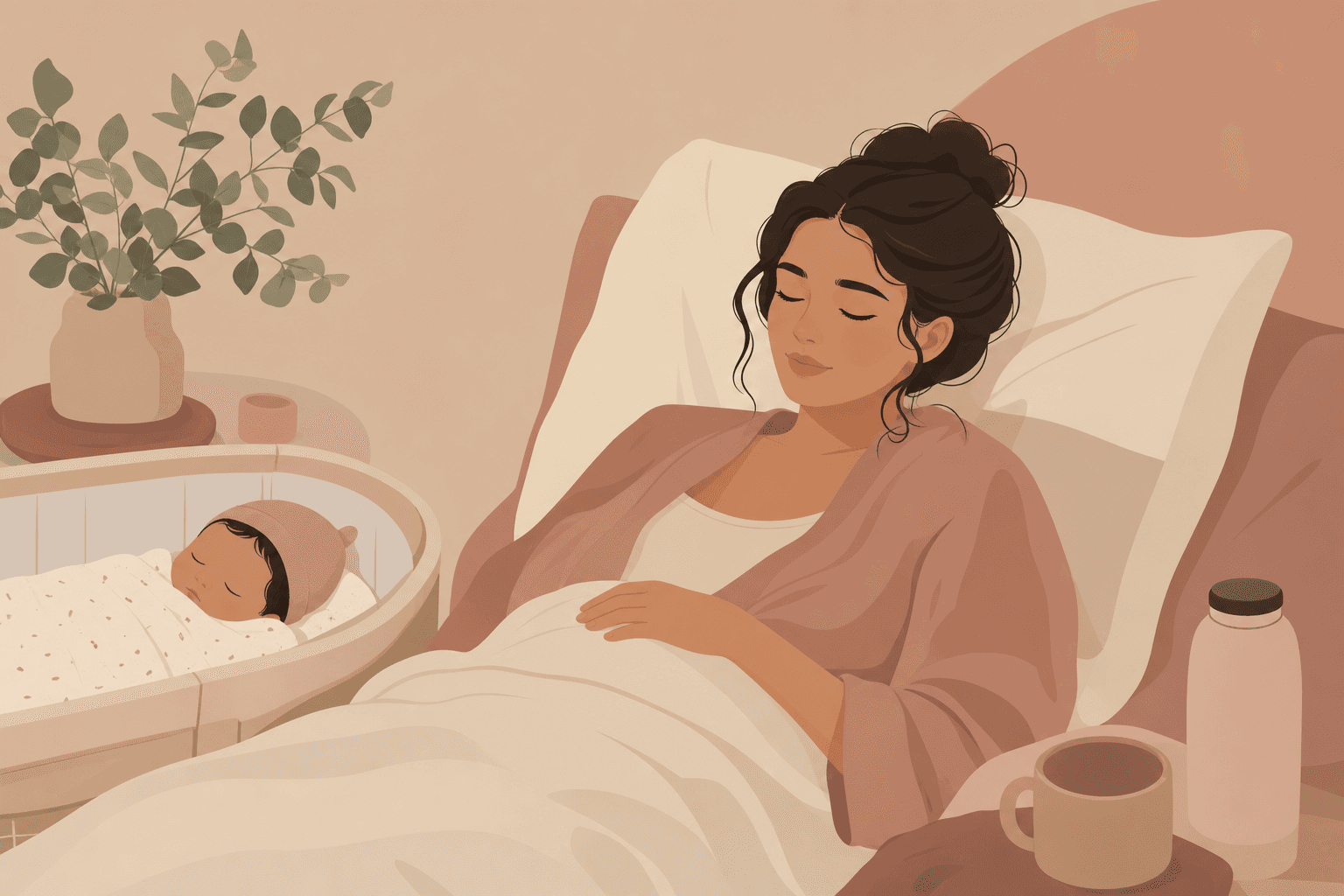
You woke soaked — again — hair plastered, pyjamas clinging, wondering if this is hormones or something the midwife should have flagged. Baby finally sleeps and you are stripping bedding at 3 a.m. with shaking hands and a racing mind.
NHS postnatal body guidance lists night sweats among common recovery symptoms — especially as milk establishes. This page separates normal hormonal drenching from red flags, and helps you rest without catastrophising every damp sheet.
How you might be feeling
Night sweats feel like your body is betraying you twice — no sleep, then laundry. You might fear undiagnosed infection or thyroid disaster because search results are dramatic.
Partner sleeping through while you change clothes breeds resentment. Embarrassment if visitors notice smell of sweat and milk combined. Hypervigilance — checking temperature hourly, sniffing wound, googling sepsis with baby on chest.
Exhaustion loop: sweat wakes you, anxiety prevents return to sleep, baby wakes sooner because you are upright. Tomorrow feels impossible before dawn.
What is usually normal
NHS and NICE postnatal materials describe sweating as fluid shift from pregnancy — hormone driven, worse for some breastfeeders. Peaks often week one to two postpartum, gradual fade.
Changing clothes once nightly can be baseline not crisis — prepare stack of sleep shirts.
No fever, stable wound or perineum, normal lochia — sweats alone usually benign timeline.
What you can try tonight
-
Towel layer under sheet — swap faster than full bed change.
-
Water bottle bedside — rehydrate after soak.
-
Temperature once if anxious — log on check-in, not hourly.
-
Fan or window crack — cool room reduces repeat.
-
Rest planner — nap permission tomorrow if night brutal.
When to contact someone
NHS 111 if fever, rigors, breathing worry, or feeling seriously unwell tonight.
general practitioner (GP) if sweats worsen after improving, or new symptoms — pain, discharge, breast redness.
999 if collapse or severe distress — rare.
At your appointment
Tell general practitioner (GP): night sweats after birth worry me.
- Weeks since birth, breastfeeding yes/no
- Temperature log if kept
- Other symptoms — fever, pain, mood
Related reading
- Body hub: Hub mum body recovery
- Overview: Postpartum recovery guides
- Check nerves: Six week mum check dread
- Fever worry: Postpartum fever when to call
Official sources
If printable helps
Symptom log in mum recovery check-in. Nap blocks in postpartum rest planner. Questions for general practitioner (GP) in six week check appointment prep.