
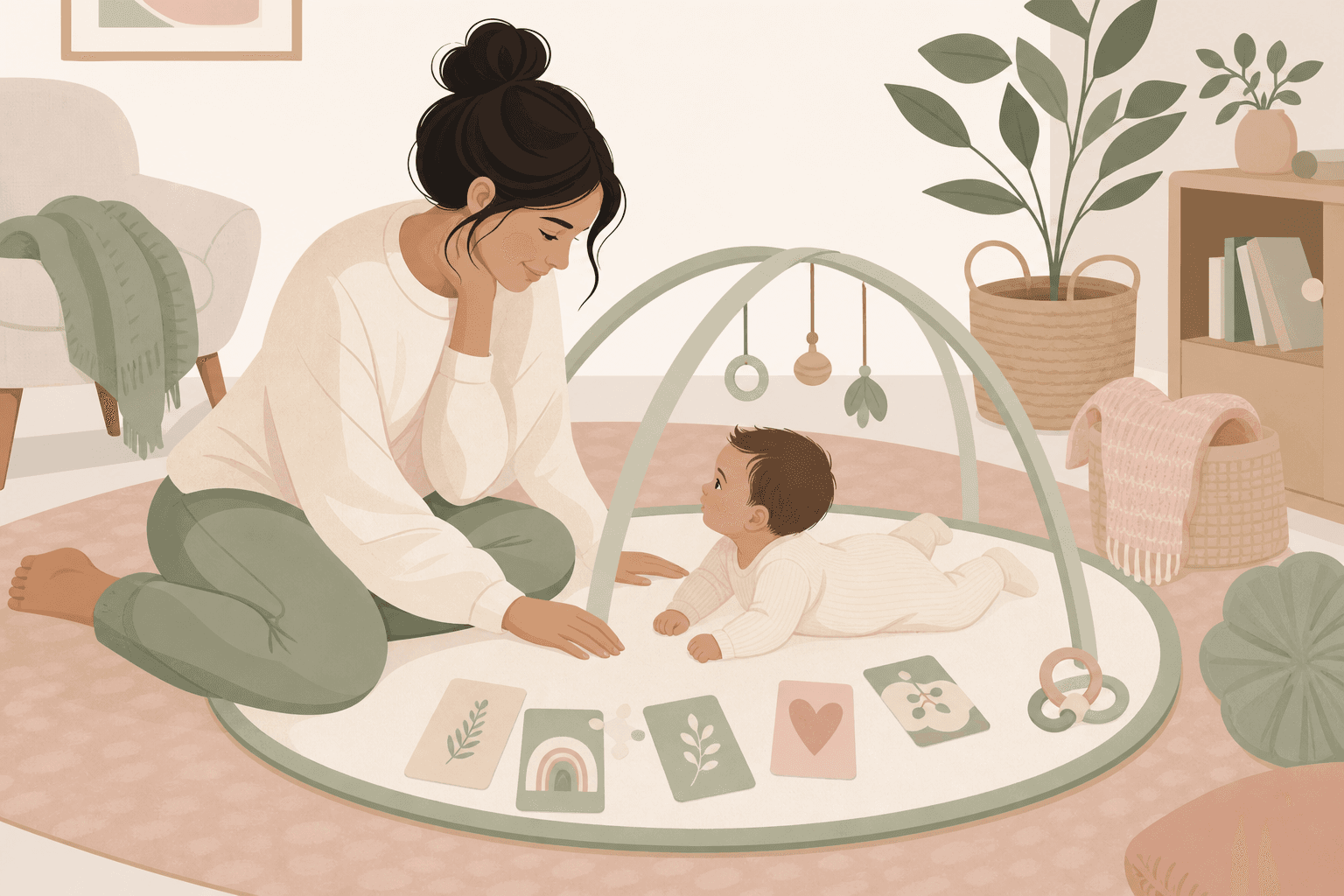
You set baby on the play mat and they scream ten seconds later — or fall face-forward, or treat tummy time like personal betrayal. You watch reels of infants holding their heads like mini bodybuilders and wonder if your living room floor is where development stalled.
Tummy time anxiety is one of the most googled newborn worries for good reason: guidance says do it, babies often hate it, and social media turns minutes into medals. NHS baby development pages recommend regular awake prone play — with ranges, not stopwatch shame.
How you might be feeling
Tummy time guilt often arrives during the scream — you pick your baby up wondering if you chose comfort over their future. Timer apps can turn parenting into gym reps you feel you are failing, and one short session may leave you dreading the next.
You might avoid the mat entirely because the last session ended in tears — yours and theirs — and shame labels you soft for stopping. " ignores edited clips, different ages, and babies who simply tolerate prone play better on some days than others.
If your baby was premature or spent time in a neonatal intensive care unit (NICU), corrected age maths can spin in your head while the calendar says otherwise. Flat head concerns can add clinic judgment pressure on top of mat dread, even when you are doing everything guidance recommends.
What is usually normal
National Health Service (NHS) guidance notes that many babies protest prone play initially — neck muscles build gradually, like any new physical skill. Chest-to-chest time on you counts toward awake prone play; the mat is optional, not the only valid version.
Sessions spread across the day help — three ten-second wins can feel easier emotionally than one thirty-second marathon that ends in crying. Head wobble at birth steadies over weeks, and an occasional face-plant into hands is normal learning when someone is supervising nearby.
Health visitors check head control at the six to eight week review, and bringing your tracker data to that appointment is more useful than forcing extra crying tonight. One skipped day does not stall development when regular opportunities continue over time.
What you can try tonight
-
Tummy time tracker gentle activity log — log one successful moment, even chest on partner.
-
Baby milestone notes first 12 weeks — note head lift attempts without minute obsession.
-
Newborn routine builder — slot tummy try after nappy change when alert.
-
Stop when crying peaks — retry later; forced sessions build dread not strength.
-
Safe sleep reset — back in cot for sleep always; mat is awake only.
When to contact someone
Health visitor or general practitioner (GP) (general practitioner) if there is no visible head lift improvement by twelve weeks term, strong head preference to one side only, or a flat spot with limited turning.
NHS 111 if your baby falls from the mat or is injured during tummy time — rare with supervision, but a review helps.
999 if your baby has a breathing crisis or becomes unresponsive.
At your appointment
Tell health visitor: tummy time progress worries me — need your assessment.
- Activity log with dates and durations
- Photos or video only if requested — ten seconds side view
- Prematurity or torticollis history if any
Related reading
- Tummy time hub: Tummy time worries
- Milestones: Baby milestone delay worries
- Comparison: Baby development comparison guilt
- Flat head: Flat head baby worry
Official sources
If printable helps
Tummy time tracker gentle activity log records sessions without leaderboard pressure. Baby milestone notes first 12 weeks widens view beyond mat minutes. Newborn routine builder without pressure anchors tummy tries in gentle daily rhythm.