
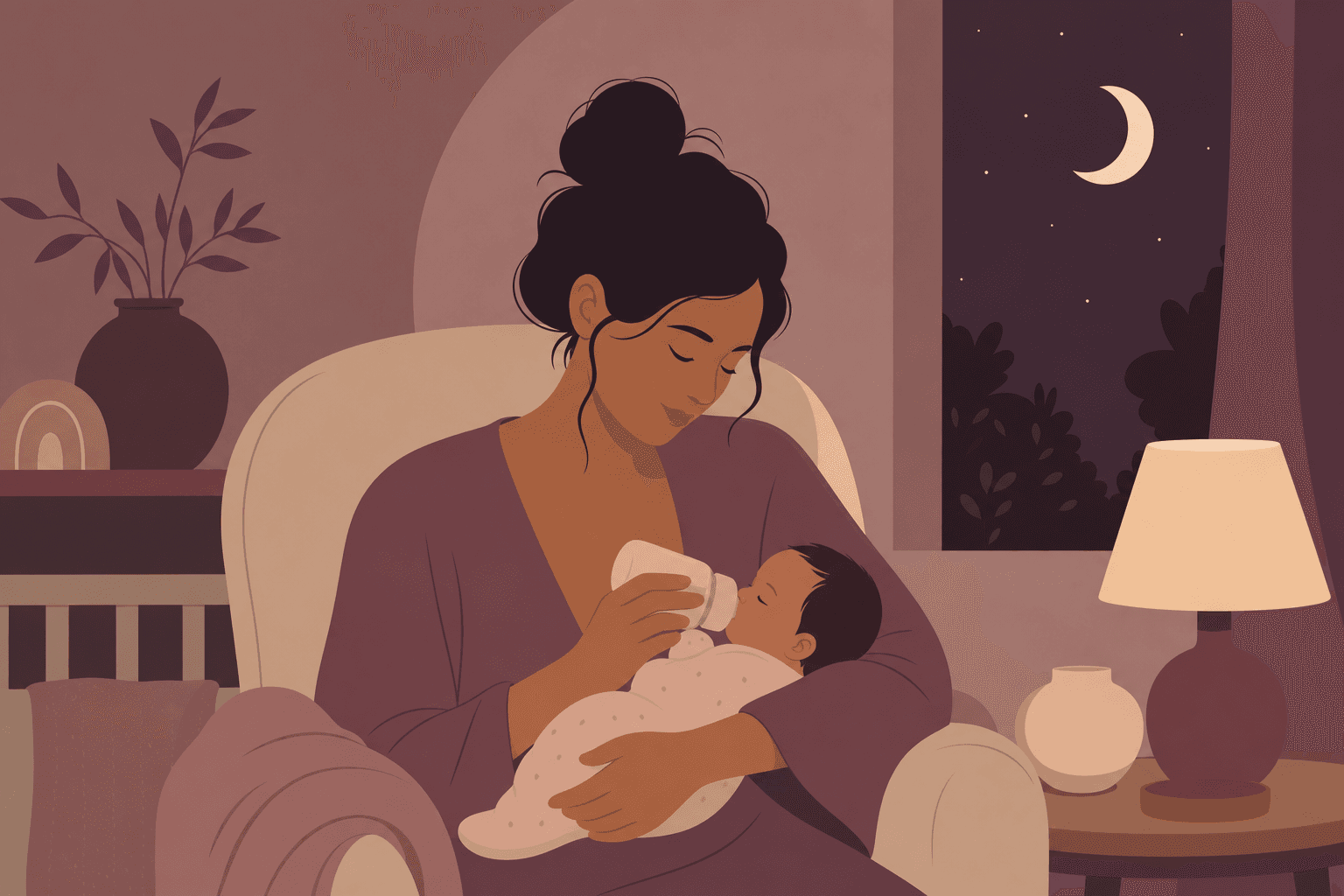
It is 2:14 a.m. Everyone else is asleep. Baby is latched and you are staring at the wall feeling like the only person awake on the street.
The feed is necessary; the loneliness still hurts.
You do not need to white-knuckle in silence. This page covers calm audio company, low-light grounding, and when lonely nights need a person or clinician — not just another playlist.
How you might be feeling
Night feeds can feel like time stopped — same chair, same crack in the ceiling, same thoughts looping on repeat. You might envy sleeping partners, scroll envy posts, then hate yourself for scrolling when you should be resting.
Some mums describe feeds as the only moment they sit still all day — grief for your old life, worry about tomorrow, and love for this baby collide in the dark. Tears during let-down are common and do not mean you are ungrateful.
If feeds are the only time scary intrusive thoughts appear, tell your general practitioner (GP) in daylight — audio calm helps the hour, therapy helps the pattern. Ashamed to need a voice at 2 a.m. — humans evolved for tribe, not solo feeding in a silent house. Single parenting or partner on night shift makes loneliness sharper — audio bridges the gap until daytime humans return. Save helpline hours on your phone now so you are not googling at peak exhaustion.
What is usually normal
The NHS expects night feeds for months. Loneliness is a known postpartum experience when daytime support vanishes.
Audio and gentle routine do not fix society's isolation — they cushion one hour while you arrange real help.
Many cultures historically fed in community; modern nuclear homes at 3 a.m. are unnaturally quiet. Feeling that wrongness is accurate, not weakness.
What you can try tonight
-
Open audio companion at low volume before latch or bottle — not mid-panic scroll.
-
One light source — dim amber lamp, not overhead.
-
Water within reach — dehydration worsens wired feeling.
-
Text partner one emoji if awake — connection without conversation demand.
-
After feed — pause audio, note one win: fed, safe, next sleep.
When to contact someone
999 / NHS 111 baby illness or harm thoughts.
general practitioner (GP) if night loneliness joins daily low mood or rage every feed.
Partner or friend schedule daytime — ask for specific night shift tomorrow.
At your appointment
Mention lonely feeds to health visitor — home start programmes or peer support may exist locally. Ask your general practitioner (GP) about perinatal mood if nights are darkest emotionally.
Related reading
- Sunset dread: Dreading night feeds
- Wired after feeds: Can't sleep when baby sleeps
- Overwhelm: Postpartum overwhelm
- Hub: Sleep night worries
Official sources
If printable helps
Lonely feeds deserve company without bright screens. Night feed audio companion offers spoken calm at low volume. 3 a.m. overwhelm reset guide walks breathing when thoughts race. Night feed setup checklist orders bedside practicals so your hands stay free. Together in the night feed calm pack.